
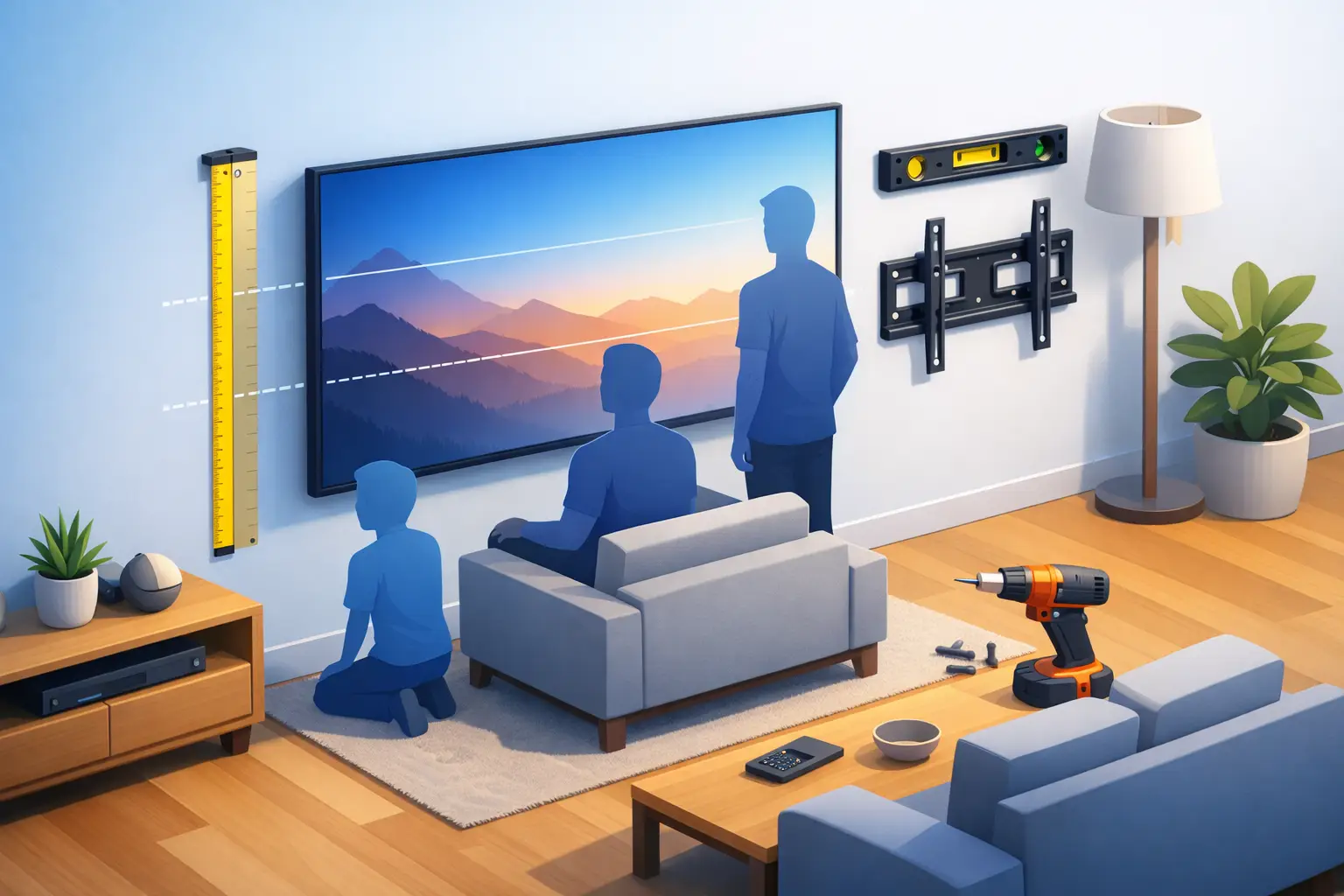
A TV can look perfectly centered on a wall and still be uncomfortable to watch. The correct wall mount height for TV is based less on the wall itself and more on where people sit, how they watch, and the layout of the room. Getting this measurement right before drilling helps prevent neck strain, awkward furniture placement, and costly adjustments later.
For most living rooms, the goal is simple: place the center of the screen near the viewer’s eye level when seated. However, fireplaces, reclining sofas, bedrooms, kitchens, and open-plan spaces can change the best position. A professional installation starts with the room, not a one-size-fits-all measurement.
The Best Wall Mount Height for TV in Most Rooms
For standard seated viewing, the center of the TV screen should usually sit about 42 inches from the floor. This is a useful starting point because the average seated eye level falls close to that range.
That does not mean every screen should be installed with its bottom edge at 42 inches. Larger TVs have a greater screen height, so the bottom edge will sit lower when the screen center remains at the same level. For example, a 65-inch TV is roughly 32 inches tall. If its center is mounted 42 inches from the floor, the bottom of the screen will be around 26 inches high before accounting for the mount design.
The center point matters more than the bottom edge. Mounting based only on what looks balanced above a console often places the screen too high for comfortable viewing.
A Simple Way to Measure It
Sit in your usual viewing position and measure from the floor to your eyes. If you use a deep sofa, a recliner, or chairs with different seat heights, take a practical average. Mark that measurement on the wall as the intended center of the screen.
Next, check your TV specifications for the total height of the screen. Divide that number by two, then measure downward from your center mark to estimate where the bottom of the TV will fall. This gives you a clear idea of the final position before the bracket is installed.
Keep in mind that the wall plate and VESA mounting holes are not always located at the exact center of the TV. The installation team should measure the bracket position carefully so the screen lands at the planned height.
Why TVs Are Often Mounted Too High
Many homeowners place a TV high because they want it visible above furniture, a fireplace, or decorative features. The result may look neat at first, but it often causes viewers to tilt their heads upward for long periods. That can become uncomfortable during movies, sports, gaming, or everyday streaming.
A TV should not be treated like wall art. It is a viewing screen, and comfort should take priority over symmetry. If a console is unusually tall, consider a lower console, a wall-mounted media unit, or a different wall rather than automatically raising the TV.
Mount height also affects image quality. Most modern TVs have wide viewing angles, but color, contrast, and brightness can still appear less consistent when the screen is viewed from an extreme angle. This is especially noticeable in larger rooms or when family members sit in different areas.
Adjusting TV Height for Different Rooms
The 42-inch center guideline works well for a typical living room, but the best wall mount height for TV depends on how the room is used.
Living Room
A living room is usually designed for long viewing sessions, so eye-level placement is the priority. Start with the seated eye-level measurement and keep the center of the screen close to it. If the sofa reclines, measure eye level when it is in the position most often used for watching.
For a TV above a media console, leave enough space for soundbars, remote controls, ventilation, and a clean visual gap. A space of 4 to 8 inches between the console and the bottom of the TV often works well, but this depends on the furniture height and screen size.
Bedroom
Bedroom TVs are commonly mounted higher because viewers watch while lying down or sitting up in bed. In this case, a slightly elevated screen can be more comfortable than a strict seated eye-level position.
A tilt mount is often a good choice for bedrooms. It allows the screen to angle downward toward the bed, reducing glare and making the picture easier to view. Do not mount the TV excessively high just because the bed is elevated. Test the viewing angle from your normal position before finalizing the placement.
Above a Fireplace
Mounting a TV over a fireplace is sometimes the only available option, but it involves real trade-offs. The screen will often sit above comfortable eye level, and heat exposure may affect the TV if the fireplace is used regularly.
Before installing, measure the wall temperature while the fireplace is operating and check the TV manufacturer’s clearance guidance. A full-motion or tilt mount can improve the viewing angle, but it cannot fully solve a screen that is mounted too high. If possible, use a lower wall or a side wall for better comfort and easier cable management.
Kitchen, Gym, or Standing Area
In spaces where people mainly stand, such as kitchens, home gyms, garages, or workshops, the TV can be mounted higher than in a living room. Eye level while standing is typically much higher, and viewers may only watch for short periods.
Even here, make sure the TV is not so high that users need to strain their necks. Consider sightlines from key areas, such as a treadmill, kitchen counter, or workbench.
Screen Size, Viewing Distance, and Height
A larger TV does not always need to be mounted higher. In fact, because large screens fill more of your field of view, their center should generally remain close to eye level. Raising a 75-inch or 85-inch TV too high can make the upper portion of the screen difficult to watch comfortably.
Viewing distance also matters. A TV that is closer to seating may feel overwhelming if it is mounted high, since viewers must move their eyes and head more to follow the image. If seating is farther away, there may be slightly more flexibility, but eye-level placement remains the most comfortable choice.
Before installation, use painter’s tape or a cardboard template to outline the screen size on the wall. Sit in your usual location and look at the proposed placement for a few minutes. This simple test often reveals problems that are easy to miss when working from measurements alone.
Mount Type Can Change the Final Position
The mount you choose affects both screen position and viewing comfort. A fixed mount keeps the TV close to the wall and is ideal when the screen is already at the correct height. It provides a clean appearance and is often the best option for a straightforward living room setup.
A tilt mount is useful when the TV must be positioned slightly above eye level, such as in a bedroom or above a fireplace. Tilting the screen down can improve visibility, although it should not be used as an excuse to install the TV far too high.
A full-motion mount allows the screen to swivel and extend from the wall. It can work well in open-plan rooms, corners, or spaces with multiple seating areas. Because these mounts carry more weight away from the wall, proper stud location, hardware selection, and secure installation are essential.
Do Not Forget Outlets, Cables, and Wall Strength
The ideal height should work with the room’s electrical layout, but outlets should not dictate an uncomfortable screen position. A professional installation can plan cable routes, conceal wiring where appropriate, and position devices such as streaming boxes or soundbars neatly.
Wall construction is equally important. Drywall alone is not designed to safely hold a large TV. The mount should be secured into wall studs or a suitable structural support system. This is particularly important for large screens and full-motion brackets, where movement increases the load on the mounting points.
Before work begins, confirm the TV size and weight, mount type, wall material, outlet location, and any hidden plumbing or electrical lines. A careful site check prevents avoidable damage and helps ensure the screen remains level and secure.
When Professional TV Installation Makes Sense
A small fixed TV mount may seem simple, but installation becomes more technical when the screen is large, the wall is concrete or tile, cables need to be concealed, or the location is above a fireplace. The right installer will check the mounting surface, align the screen precisely, secure the bracket correctly, and test the final viewing angle with you.
Roukin Al Yarmouk provides professional TV installation with careful mounting, practical cable management, and attention to the details that affect daily comfort. A properly mounted TV should look clean, sit level, and feel easy to watch from the first movie to the hundredth.
Before choosing a final height, sit where you normally relax, look at the proposed screen position, and let comfort make the decision. The best installation is the one you stop noticing because watching feels natural.