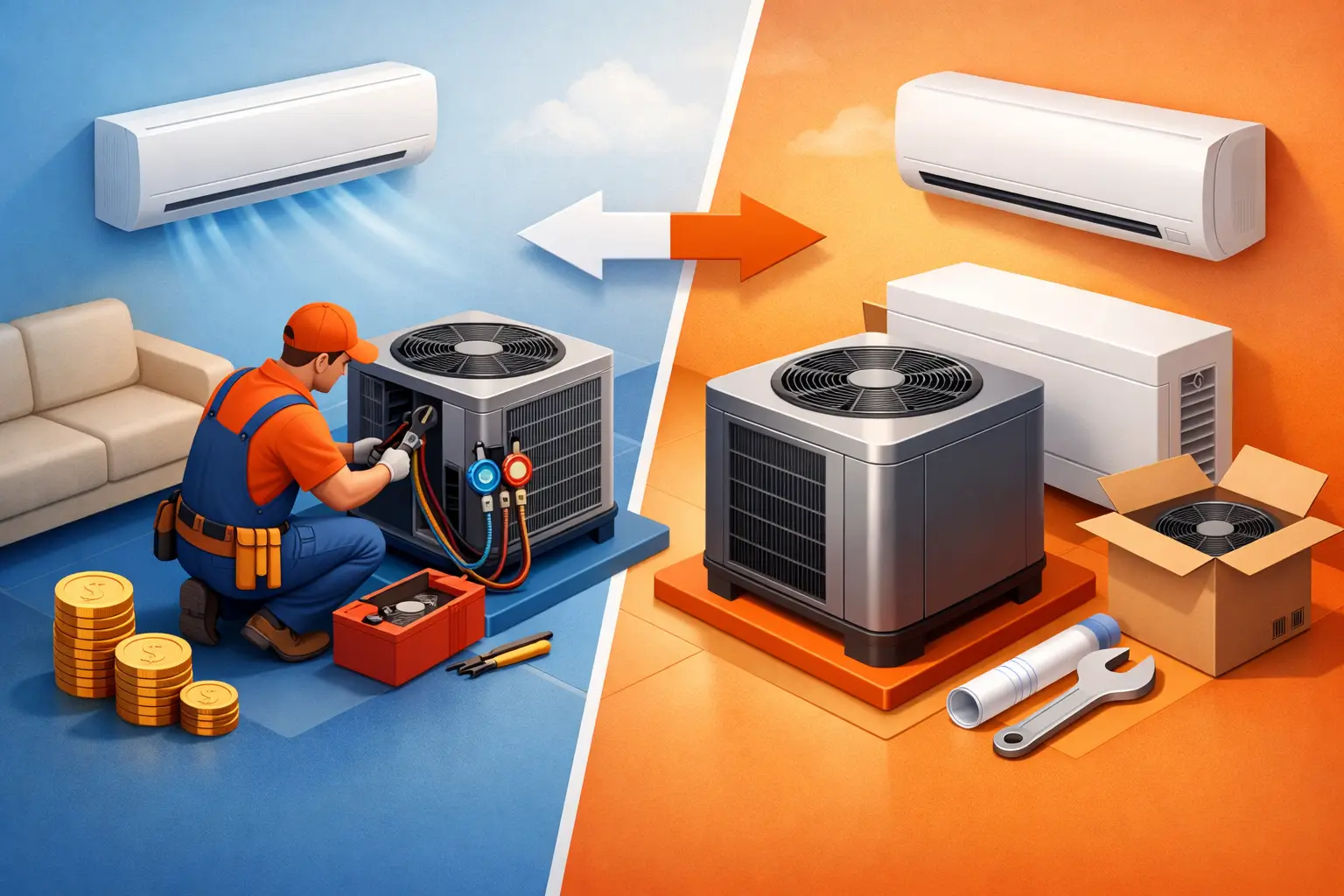
A failing air conditioner rarely waits for a convenient moment. It starts blowing warm air during a heat wave, trips the breaker at night, or leaks water just before guests arrive. The decision between AC repair versus replacement can feel urgent, but the right answer is not always “buy new” or “fix it again.” It depends on what failed, how old the system is, how efficiently it is cooling, and what the repair will cost you over the next few years.
A professional inspection gives you the clearest answer. Before approving a major repair or investing in a new unit, you need to know whether the issue is isolated or a sign that the whole system is nearing the end of its service life.
Start With the Age of Your AC System
Most central air conditioning systems and split AC units can provide reliable service for roughly 10 to 15 years when they receive regular maintenance. Some systems last longer, especially when filters are changed, coils are cleaned, and small issues are repaired early. However, age still matters because wear affects compressors, fan motors, electrical components, insulation, and refrigerant lines over time.
If your AC is less than 8 years old and has been generally dependable, repair is often the practical choice. A failed capacitor, worn contactor, blocked drain line, faulty thermostat, or damaged fan motor can usually be corrected without replacing the entire system. These are common service issues, and a proper repair can restore cooling quickly.
Once a system is around 10 years old or more, the decision needs more careful evaluation. A single repair may still be worthwhile, but repeated breakdowns, declining cooling performance, and rising energy bills can indicate that replacement will offer better value. The question is no longer just whether the system can be repaired. It is whether repairing it remains a sensible investment.
AC Repair Versus Replacement: Compare the Real Cost
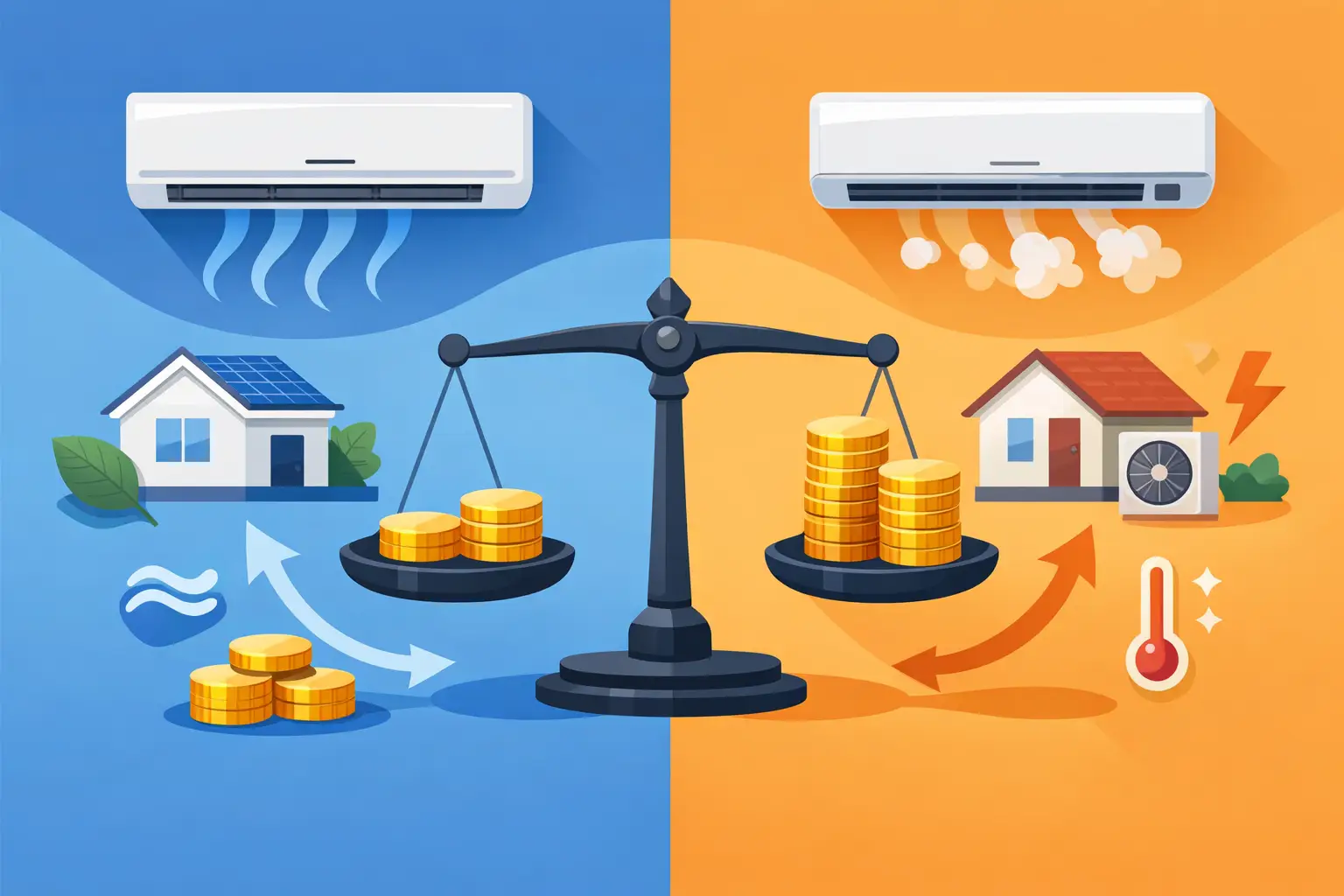
The lowest immediate price is not always the lowest overall cost. Repairing an older AC may be cheaper this week, but it can become expensive if another major component fails a few months later. On the other hand, replacing a unit that only needs a minor repair can waste money that could have been avoided.
A useful rule of thumb is to compare the repair quote with the cost of a properly sized replacement system. If a major repair costs close to half the price of a new unit, replacement deserves serious consideration, particularly for an AC that is already older and inefficient. This is not a fixed formula, but it helps put a large repair in perspective.
For example, replacing a capacitor or clearing a drain blockage is normally a reasonable repair, even on an older unit. Replacing a compressor, repairing a major refrigerant leak, or addressing repeated electrical failures is different. Those repairs can be substantial, and they do not erase the aging of the other components still inside the system.
Ask for a clear explanation of the fault, the parts required, labor included, and whether the repair carries a warranty. Transparent pricing helps you compare a repair decision with replacement without surprises after the work begins.
Signs Repair Is Still the Right Choice
Repair is usually the better route when the AC has a clear, isolated problem and has otherwise performed well. A technician may find that the unit is low on refrigerant because of a small, repairable leak, the condenser coil is dirty, or the outdoor unit has a worn electrical part. These are service concerns, not always reasons to replace a complete system.
A repair also makes sense when your cooling needs have not changed. If your home is comfortable, rooms cool evenly, humidity is under control, and the unit was correctly sized when installed, there may be no reason to replace it just because it needs maintenance.
Tenants may also prefer repair when the property owner is responsible for major equipment decisions. In that situation, documenting the issue with a professional service report can help everyone understand whether the system needs a simple fix or a long-term replacement plan.
Regular maintenance supports this choice. Cleaning filters, checking electrical connections, clearing drain lines, washing coils when needed, and confirming correct refrigerant levels can prevent many avoidable failures. Maintenance cannot make an old system new, but it can extend its useful life and protect your comfort between seasons.
When Replacing Your AC Makes More Sense
Replacement becomes the stronger option when breakdowns are becoming routine. If you have called for service multiple times in a year, the system is likely costing more than the invoices alone. There is also the disruption of waiting for parts, arranging visits, and dealing with uncomfortable rooms during hot weather.
Poor performance is another warning sign. An AC that runs for long periods without reaching the thermostat setting may be undersized, losing efficiency, or struggling with mechanical wear. Uneven cooling, excess indoor humidity, unusual noises, frequent breaker trips, and ice buildup on refrigerant lines all deserve professional attention. Some can be repaired, but several symptoms together often point to a system that is no longer operating reliably.
Older refrigerant systems can also complicate repairs. If your unit uses a refrigerant that is becoming difficult or expensive to source, a leak repair and recharge may be less attractive than upgrading to a current system. A technician can explain the refrigerant used by your equipment and what that means for future service costs.
A new AC can improve more than cooling capacity. Correctly selected equipment may operate more efficiently, manage humidity better, run more quietly, and provide more consistent temperatures throughout the home or small business. The benefit is greatest when replacement includes professional sizing, careful installation, pressure testing, secure electrical connections, and a full performance check after startup.
Size and Installation Matter as Much as the Unit
Replacing an AC with the same capacity is not always the correct move. A home may have been renovated, insulation may have changed, new windows may have been added, or the existing unit may have been oversized from the beginning. An oversized AC can cool too quickly without removing enough humidity, while an undersized unit may run constantly and struggle during peak heat.
A qualified technician should consider room size, ceiling height, sun exposure, occupancy, insulation, and the layout of the space before recommending BTU capacity. For split systems, the installation should also account for suitable indoor and outdoor unit placement, copper pipe routing, drainage, electrical requirements, and safe mounting.
A high-quality unit can underperform when installation is rushed. Poor drainage can cause leaks, incorrect refrigerant handling can reduce efficiency, and loose electrical work can create reliability and safety concerns. Choosing equipment and installation through one professional provider gives you a clearer scope of work and one point of contact if questions arise later.
Questions to Ask Before You Decide
Before authorizing either option, ask the technician what specifically failed and whether the issue is likely to return. Ask about the age and overall condition of the system, the expected life after repair, the total repair cost, and the estimated cost of a comparable replacement. You should also ask whether your current unit is correctly sized and whether its efficiency has noticeably declined.
For a replacement quote, confirm what is included. The scope should cover the equipment, standard installation materials, mounting, copper piping where applicable, drainage setup, electrical connections, pressure testing, commissioning, and a basic demonstration of controls. If extra work may be needed because of access, longer pipe runs, wall modifications, or electrical upgrades, it should be explained before installation day.
Choose the Option That Restores Reliable Comfort
The best decision is the one that protects your comfort without spending more than necessary. A targeted repair is often smart for a newer, well-maintained unit with a minor fault. Replacement is usually more practical when an older system needs a costly major repair, breaks down repeatedly, or no longer cools efficiently.
Roukin Al Yarmouk can assess the condition of your AC, explain the repair scope clearly, and help you choose a suitable replacement when an upgrade is the better long-term answer. Reliable cooling starts with an honest diagnosis, proper equipment selection, and workmanship that is completed correctly the first time.