A weak airflow problem often starts with one small, overlooked part of your AC system: the filter. Knowing how to clean ac filters correctly can help your unit cool more evenly, reduce dust moving through the home, and avoid unnecessary strain on the system. It is a simple maintenance task, but using too much water, reinstalling a damp filter, or washing a disposable filter can create bigger problems.
For most homeowners and tenants, cleaning the filter takes less than 30 minutes. The key is identifying the type of filter you have, handling it carefully, and knowing when cleaning is no longer enough.
Why a Clean AC Filter Makes a Difference
Your AC filter catches airborne dust, lint, hair, and other particles before they enter the indoor unit. As that material builds up, air has a harder time passing through the system. The AC may need to run longer to reach the set temperature, while some rooms can feel warmer than others.
A dirty filter can also contribute to reduced airflow from vents, higher electricity use, musty odors, and extra wear on the blower components. In homes with pets, frequent cooking, open windows, or nearby construction dust, filters can become dirty much faster than expected.
Cleaning a reusable filter supports normal operation, but it does not solve every cooling issue. If the AC still blows weakly after the filter is cleaned, the cause could be a dirty indoor coil, a blocked drain line, low refrigerant, damaged ductwork, or a mechanical fault. Those issues require professional inspection.
Check Whether Your Filter Is Washable First
Before removing anything, turn the AC off at the thermostat or remote control. If you are working on a central system, switch off power at the unit if it is safe and accessible. This prevents the system from pulling loose dust inside while the filter is out.
Most wall-mounted split AC units have washable mesh filters behind the front panel. Central AC systems may use disposable pleated filters, reusable electrostatic filters, or washable mesh filters placed behind a return-air grille or inside the air handler.
Look for instructions printed on the filter frame or in the AC manual. A washable filter is usually made from a plastic frame with a fine mesh screen. A disposable filter is often made from pleated paper or synthetic fabric in a cardboard frame. Do not rinse a disposable filter. Water can damage its filtering material and may cause it to lose shape.
If you cannot identify the filter type, remove it carefully and inspect the frame. When in doubt, replace it rather than washing it.
How to Clean AC Filters Safely
Remove the filter carefully
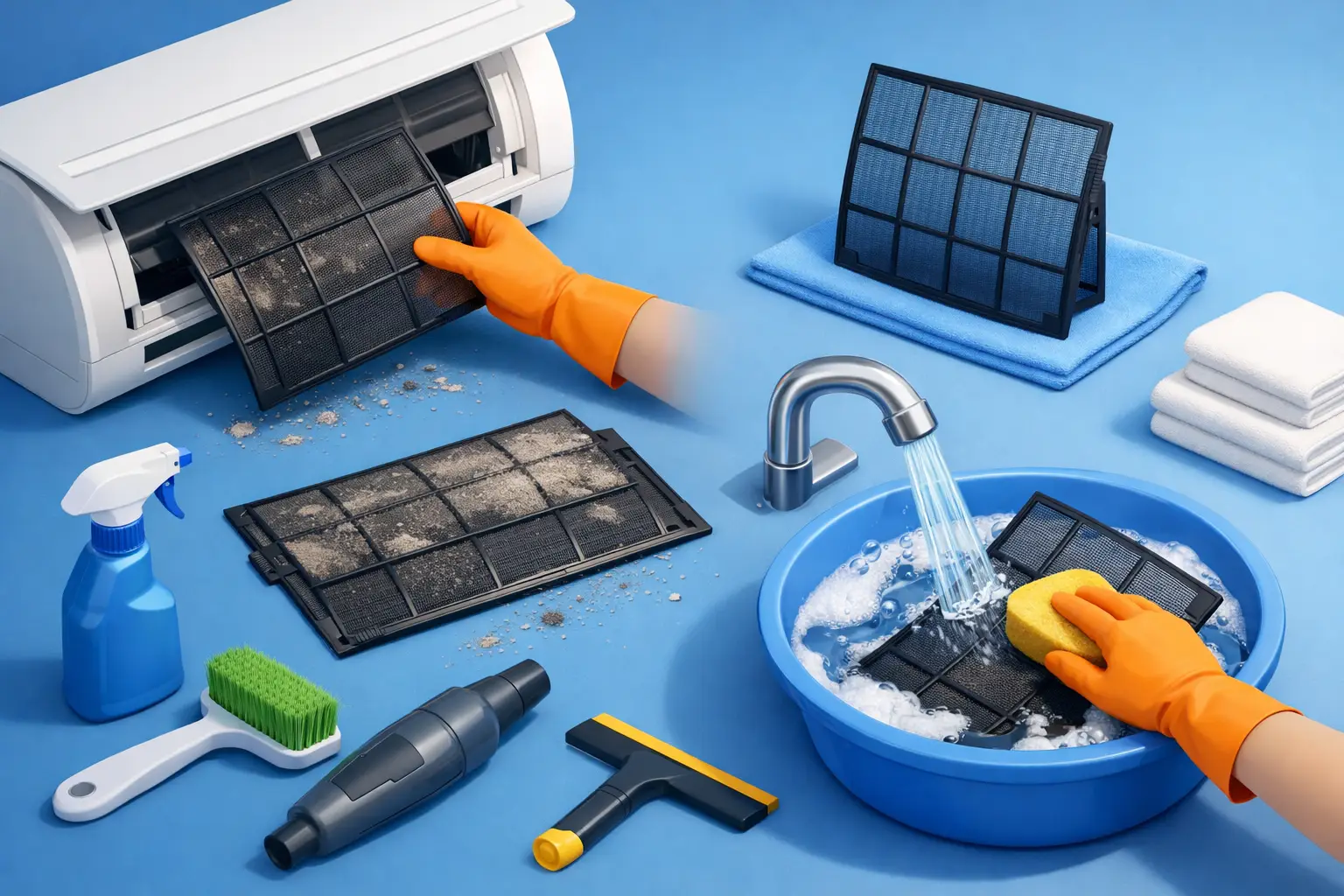
Open the indoor unit panel or return-air grille according to the manufacturer’s instructions. Slide the filter out slowly and keep it upright where possible. This limits the amount of trapped dust that falls onto floors, furniture, or the indoor AC components.
Take a quick photo before removal if the filter orientation is not obvious. Many central AC filters have an airflow arrow on the frame. When reinstalling one, that arrow should point toward the air handler or ductwork, not toward the room.
Remove loose dust before washing
For a lightly dusty washable filter, use a vacuum cleaner with a soft brush attachment. Vacuum gently on both sides without pressing hard on the mesh. This method is often enough for routine maintenance and keeps the filter from becoming overly wet.
For heavier buildup, take the filter outdoors. A gentle shake can loosen surface dust, but do not hit the filter against a wall or railing. Bending the frame or tearing the mesh can leave gaps that allow dust into the system.
Rinse with low-pressure water
Rinse a washable filter with lukewarm water from the clean side toward the dirty side. This helps push trapped dust out rather than deeper into the mesh. Use low water pressure. A strong spray nozzle can stretch or tear delicate filter material.
Avoid hot water, bleach, harsh degreasers, and abrasive brushes. These products can damage the mesh, weaken the frame, or leave residue that affects indoor air quality. If the filter has oily kitchen residue or stubborn dirt, use a small amount of mild dish soap in lukewarm water, then rinse thoroughly until no soap remains.
Let the filter dry completely
Set the filter in a clean, shaded, well-ventilated place and allow it to air-dry fully. Do not reinstall it while it is damp. Moisture inside the AC can encourage mold growth, create odors, and allow dust to stick quickly to the filter again.
Do not use a hair dryer, place the filter in direct high heat, or force-dry it with a heater. Heat can warp plastic frames and damage mesh material. If you need cooling immediately, use a replacement filter if your system accepts one, or wait until the filter is completely dry before turning the unit back on.
Reinstall it in the correct position
Check that the filter is dry, intact, and free of visible dust before reinstalling it. Slide it back into its original position without forcing it. Close the front panel or grille securely, restore power, and run the AC for a few minutes.
Listen for unusual noise and check that airflow feels normal. If the panel does not close properly, remove the filter and make sure it is seated correctly. Forcing a panel shut can crack plastic clips or damage the filter frame.
How Often Should You Clean AC Filters?
For many homes, washable AC filters should be checked every two to four weeks and cleaned about once a month during regular use. During hot periods, when the system runs for long hours, more frequent cleaning is often necessary.
The right schedule depends on your household. Clean filters more often if you have pets, smokers, allergy concerns, children, open windows, or noticeable dust indoors. Homes near busy roads, construction activity, sandy areas, or dry outdoor conditions may also need more frequent attention.
Disposable filters follow a different schedule. Basic one-inch filters commonly need replacement every one to three months, while higher-capacity filters may last longer. Follow the filter label and your equipment manufacturer’s recommendation, but do not rely on the calendar alone. A visibly gray, clogged, or damaged filter should be replaced sooner.
When Cleaning Is Not Enough
A washable filter has a limited lifespan. Replace it if the mesh is torn, the frame is cracked, the filter remains discolored after cleaning, or it has developed a persistent odor. A damaged filter cannot protect the AC effectively, even if it looks mostly clean.
You should also arrange professional AC service if you notice ice on the indoor or outdoor unit, water leaking from the unit, a burning smell, loud rattling, repeated tripping of breakers, or poor cooling after cleaning the filter. Continuing to operate the system under these conditions can turn a minor repair into a more expensive one.
Professional servicing goes beyond filter cleaning. A technician can inspect coils, drainage, electrical connections, fan operation, refrigerant performance, and overall system condition. This is especially useful before peak cooling season or when a system has not been serviced for many months.
A Simple Filter Routine That Protects Your AC
Set a monthly reminder to inspect the filter, even if you do not always need to wash or replace it. Keep a spare disposable filter in the home if your system uses one, and write the installation date on its frame. For split AC units, check both filters if the indoor unit uses a pair.
Clean filters are one of the easiest ways to support better comfort and more dependable AC performance. Give the filter a quick check before the next stretch of heavy AC use, and call a qualified technician if clean airflow does not bring your cooling back to normal.