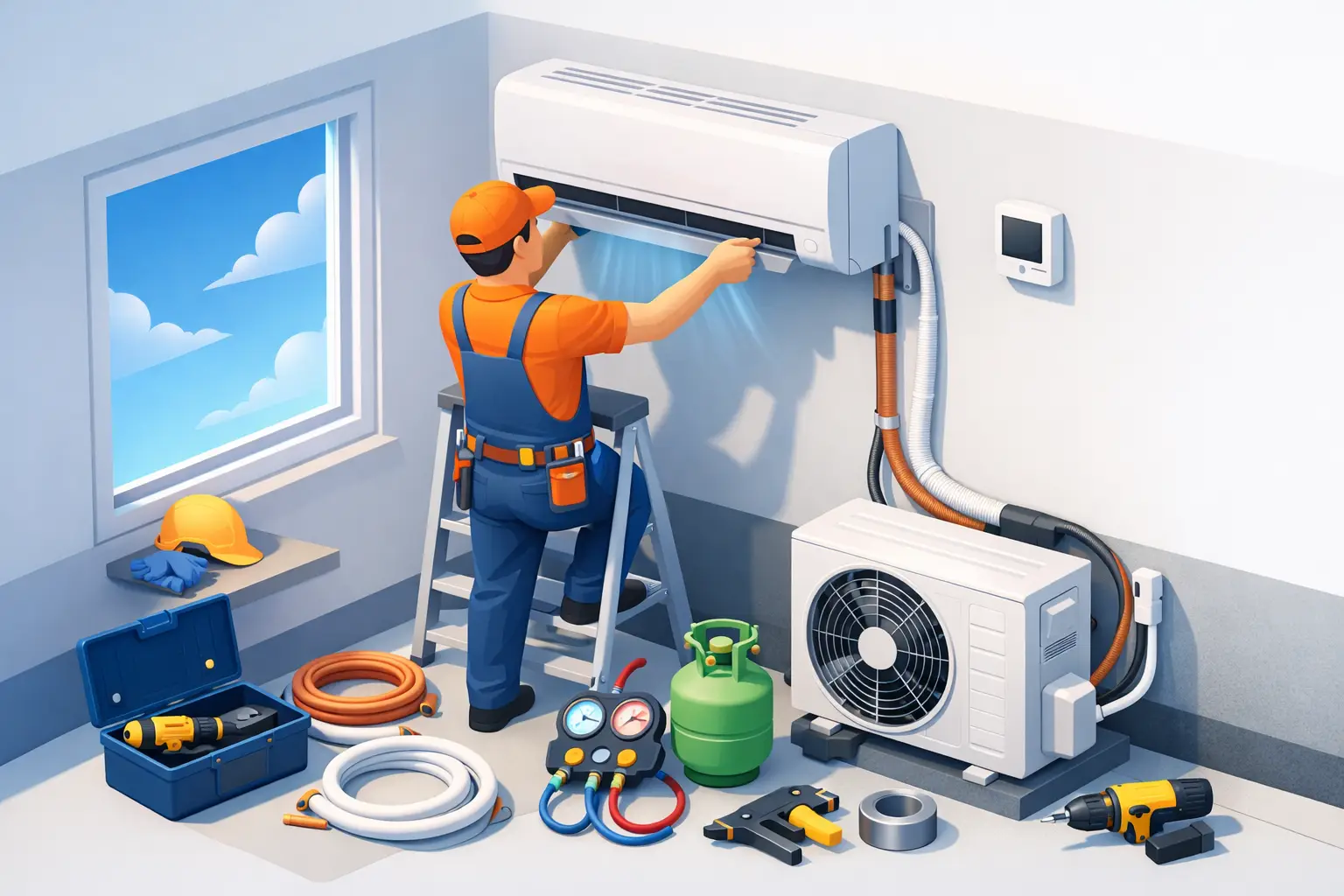

A low AC price can stop looking like a bargain the moment installation adds unexpected pipework, electrical work, wall drilling, or a return visit to fix weak cooling. When you buy AC with installation, you are not only choosing an appliance. You are choosing the quality of the system your home will rely on during the hottest days.
The right purchase brings the unit, installation scope, testing, and handover into one clear plan. That makes it easier to control costs, avoid compatibility issues, and get professional support from the start.
Buy AC With Installation for the Right System Size
Capacity is the first decision, and it should never be based on room size alone. An air conditioner that is too small may run continuously without reaching a comfortable temperature. One that is too large can cool the room too quickly, cycle on and off frequently, and remove less humidity than it should.
A proper recommendation considers the room’s square footage, ceiling height, window direction, insulation, number of occupants, and heat from appliances or equipment. A sunny top-floor room, for example, often has a higher cooling load than a similar-sized shaded room. Kitchens, server rooms, and busy small offices also need more careful sizing.
For many homes, a split AC is a practical choice because it offers efficient room-by-room cooling and quieter indoor operation. The indoor unit delivers conditioned air, while the outdoor condenser releases heat outside. Both parts must be matched correctly and installed at suitable locations for the system to work as intended.
Before placing an order, confirm whether you need cooling only or cooling and heating. Also check the unit’s energy efficiency rating, filter features, noise level, and warranty terms. Higher efficiency equipment may cost more initially, but the difference can matter when the AC operates for long hours.
Brand choice matters, but it should follow correct sizing and installation planning. A well-matched unit from a dependable brand such as Gree, WestPoint, AUX, or Midea can be a sensible option when capacity, room conditions, and service support have been considered.
What Professional AC Installation Should Include
Installation is not simply mounting an indoor unit and switching the power on. The quality of the work affects cooling performance, energy use, drainage, appearance, and the life of the equipment.
A clear installation scope should explain what is included before work begins. Standard scope often covers mounting the indoor and outdoor units, connecting refrigerant lines, basic electrical connections, a condensate drain connection, and operational testing. However, the exact allowance for copper piping, insulation, drain line, brackets, trunking, cable length, or wall penetration can vary by property and package.
Ask about these details before confirming your booking:
- The included length of copper piping, insulation, drain hose, and electrical cable
- Whether an outdoor-unit bracket, concrete base, or roof mounting arrangement is needed
- Any additional electrical requirements, including a dedicated circuit or isolator
- Access limitations, high-wall work, parking restrictions, or building approvals
- The process for pressure testing, vacuuming, drainage checks, and final demonstration
These are not minor details. Refrigerant piping that is too long, poorly insulated, kinked, or incorrectly connected can reduce efficiency. A drain line with the wrong slope can lead to water leakage indoors. Incomplete electrical work can create safety concerns or cause the unit to trip during operation.
A professional technician checks the installation location before committing to a final setup. The indoor unit needs enough open space to circulate air effectively and allow future filter cleaning or service. It should not blow directly onto a bed, desk, or seating area if that will make the room uncomfortable.
The outdoor unit also needs room to breathe. Crowding it into a closed balcony or narrow enclosure can trap heat around the condenser and force the AC to work harder. It should be securely supported, protected from unnecessary vibration, and accessible for maintenance.
Why Testing After Installation Matters
An AC can turn on and still be installed incorrectly. Proper commissioning is where the technician verifies that the system is actually ready for daily use.
The work should include checking pipe connections for leaks, pressure testing where required, and vacuuming the refrigerant lines before releasing refrigerant into the system. Vacuuming removes air and moisture from the lines. Skipping this step can affect performance and may contribute to internal system problems over time.
Once the unit is running, the technician should check air delivery, cooling response, condensate drainage, remote-control operation, and unusual noise or vibration. This is also the right time to confirm that the indoor unit is level and that water flows away correctly rather than collecting in the drain pan.
Do not rush through the handover. Ask the technician to show you how to set the temperature, select cooling modes, clean the filters, and recognize common warning signs. Understanding the basics helps you get better performance and know when professional servicing is needed.
Compare Total Value, Not Only the Unit Price
When comparing offers, look at the complete installed cost rather than the advertised AC price alone. A lower product price may exclude essential materials or testing. A more complete quote can be better value if it clearly states what work, materials, and support are included.
Price clarity is especially useful when the property has nonstandard needs. Older homes may require electrical upgrades. Apartments may have restrictions on outdoor-unit placement. A long distance between the indoor and outdoor units may require extra piping. None of these automatically makes a project expensive, but they should be identified early.
The best provider will explain standard inclusions and any additional work in plain language. You should know what is being installed, why it is needed, and what it costs before the technician begins. That approach avoids the uncertainty that often comes with separate product sellers and installers.
Choosing one provider for supply and fitting can also simplify responsibility. If there is a question about the unit, materials, or setup, you have one point of contact instead of trying to determine whether the retailer, installer, or another contractor should resolve it. Roukin Al Yarmouk supports this end-to-end approach with AC products and professional installation services designed for homeowners who want a straightforward booking process.
Prepare Your Home Before the Technician Arrives
A little preparation helps the installation move faster and protects your home. Clear furniture and valuables away from the work area, especially below the intended indoor-unit location. Make sure the technician can reach the electrical panel, the installation wall, and the outdoor location without obstacles.
If you live in an apartment or managed community, check whether approvals are needed for exterior drilling, outdoor condensers, or work on a balcony. It is better to confirm this before delivery day than to have the installation delayed after the unit arrives.
Have your questions ready as well. Confirm where the drain line will run, where the outdoor unit will sit, and whether visible trunking or cable management is required. A good installation should be functional first, but a clean finish matters too, especially in bedrooms, living rooms, and customer-facing business spaces.
Keep the New AC Performing Well
Installation is the beginning of reliable cooling, not the last step. Clean or wash the filters regularly according to the manufacturer’s instructions, particularly during periods of heavy use. Dirty filters restrict airflow, reduce comfort, and make the system work harder.
Schedule professional servicing when performance changes or as part of routine care. Warning signs include weak airflow, unusual odors, water dripping indoors, ice buildup, loud operation, or cooling that takes much longer than usual. Addressing these issues early can prevent a smaller maintenance need from becoming a major repair.
If you are ready to buy an AC, choose an installation plan that is as carefully considered as the unit itself. Clear scope, correct sizing, skilled workmanship, and final testing give you something more valuable than a quick purchase: dependable comfort you can trust when you need it most.